
A net zero home is a house that produces as much energy as it uses over a full year, usually with solar panels on the roof. It gets there by first cutting energy use sharply through airtight construction, heavy insulation and efficient heating, then covering the small remaining demand with renewable power. A bungalow, with its big roof and simple shape, is a natural fit for the idea.
Key takeaways
- Net zero means yearly energy produced equals yearly energy used, not zero bills every month.
- Efficiency comes first; solar panels only cover what is left.
- A net zero ready home is built to the same standard but without the panels yet.
- Ask for documentation, not just a sales label, when buying one.
What does net zero energy actually mean?
Over a year, a net zero home balances what it consumes against what it generates. In winter, an Ontario home uses more energy than its panels make. In summer, the panels produce extra, which flows back to the grid.
Across twelve months, those numbers even out. You may still see a monthly bill for grid connection and winter usage, but your total energy use is offset.
In Canada, net zero homes are often built and labelled through recognized programs that set technical requirements and use third-party energy modelling. The label should come with paperwork you can review.
How is a net zero bungalow built?
Net zero is not one product. It is a series of design choices that work together.
A very tight, well-insulated shell
Walls, roof and foundation have far more insulation than a typical code-built home. Builders also seal air leaks carefully and test the result with a blower-door test.
High-performance windows
Triple-pane windows are common. Placement matters too, with more glass facing south for winter sun and less on the north side.
Efficient mechanical systems
- A cold-climate heat pump for heating and cooling.
- A heat or energy recovery ventilator (HRV or ERV) to bring in fresh air without losing heat.
- Efficient water heating, often a heat pump water heater.
- LED lighting and efficient appliances throughout.
On-site renewable energy
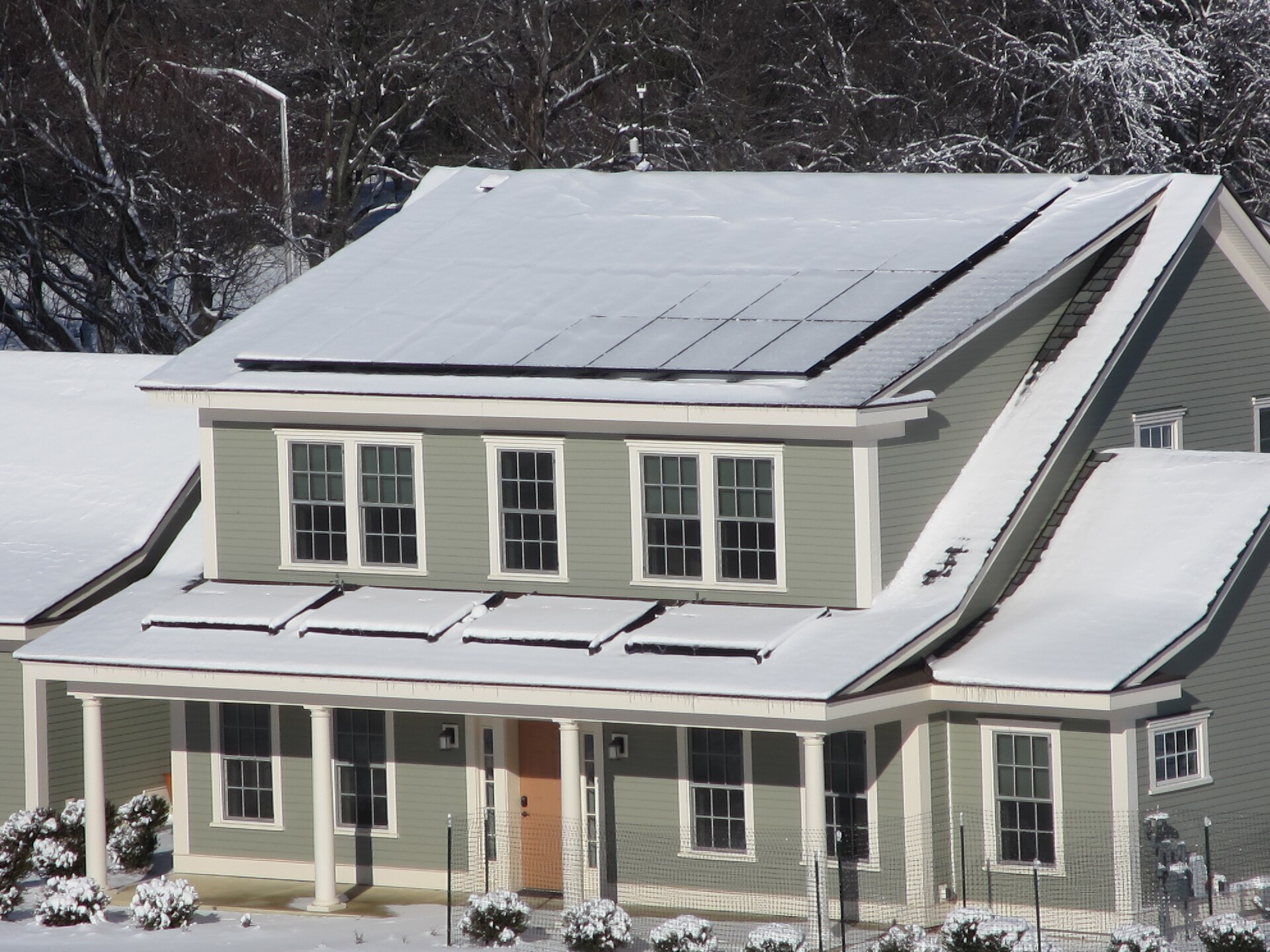
Solar panels sized to cover the home’s modelled yearly use. A bungalow has a lot of roof for its floor area, which makes this easier than on a tall, narrow house.
Net zero vs. net zero ready vs. a standard new build
| Feature | Standard new build | Net zero ready | Net zero |
|---|---|---|---|
| Insulation and airtightness | Meets Ontario Building Code | Well above code | Well above code |
| Heating system | Varies, often gas furnace | Usually heat pump | Usually heat pump |
| Solar panels | Rarely | Roof prepared, panels added later | Installed |
| Yearly energy balance | Uses grid energy | Low use, not offset yet | Offset over the year |
Net zero ready can be a smart middle ground. You get the comfort and low energy use now and can add solar when budget allows. Our guide to solar panels for bungalows explains that step.
Benefits and trade-offs
Net zero homes offer real advantages, but they are not perfect for everyone.
- Comfort: Fewer drafts, even temperatures and quiet interiors.
- Lower running costs: Small energy bills over the year.
- Fresh air: Balanced ventilation runs all the time.
- Higher upfront cost: Extra insulation, windows and panels add to the purchase price.
- Specialized systems: You need trades who understand heat pumps and HRVs.
- Limited supply: Few resale net zero bungalows come up in the GTA, so you may need to build or buy pre-construction.
Bungalow tip: If you are buying new, ask whether the builder’s model offers a net zero or net zero ready upgrade package. Adding it during construction is much cheaper than retrofitting later.
What to check when buying a net zero bungalow
- Ask for the energy label or certification and the energy model report.
- Request at least a year of utility bills and solar production data for a resale home.
- Find out who owns the solar panels and whether there are any leases or contracts.
- Get service records for the heat pump and HRV.
- Have a home inspector who knows high-performance homes review the systems.
For buyers of new homes, check whether you qualify for new-home tax relief. As of September 2026, first-time buyers can get the federal GST rebate on new homes up to $1,000,000, and Ontario has expanded HST relief on new homes for agreements signed between April 1, 2026 and March 31, 2027. These apply to new builds only, so confirm your eligibility with your real estate lawyer or accountant.
Frequently asked questions
Does a net zero home have no energy bills?
Not usually. Most stay connected to the grid, so you pay connection charges and may owe for winter use, but yearly energy costs are much lower than a typical home.
Can an older bungalow become net zero?
Yes, through a deep energy retrofit, though it is a major project. Our guide to net zero renovations covers how homeowners approach it step by step.
Are net zero homes harder to sell?
Not in general. Comfort and low running costs appeal to many buyers, but you should keep the paperwork organized so buyers and appraisers understand what they are getting.
Do net zero homes work in cold Canadian winters?
Yes. They are designed for Canadian climates, relying on heavy insulation and cold-climate heat pumps, with summer solar production balancing winter use over the year.
The bottom line on net zero bungalows
A net zero home is an efficient house first and a solar-powered house second. For bungalow buyers, the simple shape and large roof make the concept practical, especially in new construction.
If you want to explore new-build options, read our guide to choosing a pre-construction bungalow in the GTA, then set up listing alerts so you hear about efficient homes as they hit the market.

Join The Discussion