
Up-and-coming neighbourhoods usually show the same early signs: new transit or road links, rezoning and infill, fresh local businesses, and owners renovating older homes. You can’t predict prices with certainty, but you can learn to read these clues and buy a bungalow in an area that’s improving rather than one that has already peaked.
Key takeaways
- Transit, schools and employment growth are the strongest long-term signals.
- Renovation permits and new local shops show money moving into an area.
- Zoning changes that allow more units can raise demand for bungalow lots.
- Compare days on market and price trends against nearby areas.
- No signal is a guarantee, so buy a home you’d be happy to live in for years.
What makes a neighbourhood “up-and-coming”?
An up-and-coming neighbourhood is one where demand is starting to rise faster than the surrounding area. It might be a postwar bungalow pocket near a new transit line, or an older town centre that’s attracting young families.
The key word is “starting.” Once everyone calls an area hot, prices often reflect it. The opportunity is in noticing the change while homes still sell at a reasonable price for the region.
Bungalow streets are often at the centre of this shift. Their wide lots and simple footprints appeal to renovators, families and investors adding second units.
Seven signs a neighbourhood is on the rise
Watch for several of these at once. One sign alone means little.
- New or upgraded transit. Planned LRT, subway, GO service improvements or highway interchanges change how people commute.
- Rezoning and infill. City plans that allow more housing near main streets bring investment and new residents.
- Renovation activity. Dumpsters, permit signs and fresh additions on older homes mean owners are investing.
- New local businesses. Cafés, bakeries and fitness studios tend to follow young buyers.
- School improvements. New schools or expanded programs draw families.
- Employment growth. New hospitals, campuses, warehouses or offices bring jobs within a short drive.
- Public space upgrades. Parks, trails, libraries and community centres signal long-term city investment.
Learn more about how roads and rail affect prices in our post on transportation’s impact on bungalow prices.
Where to find the data
You don’t need special software to research a neighbourhood. Start with these sources:
- Municipal websites: official plans, secondary plans and council agendas show what’s approved and what’s proposed.
- Transit agency plans: look for station locations and construction timelines.
- Listing history: a Realtor can pull past sales, days on market and price changes for specific streets.
- School board updates: watch for new builds or boundary changes.
- Your own feet: walk the area on a weekday evening and a weekend morning.
For context, the GTA market in August 2026 averaged 51 days on market, with the market moving toward balance. A neighbourhood where homes sell noticeably faster than that, or where well-priced listings draw multiple offers, is showing stronger demand than the region overall.
Bungalow-specific clues to look for
Bungalows have their own signals. Pay attention to how other buyers are using them.
| What you see | What it may mean |
|---|---|
| Many bungalows with new second units | Investors see rental demand and ARU potential |
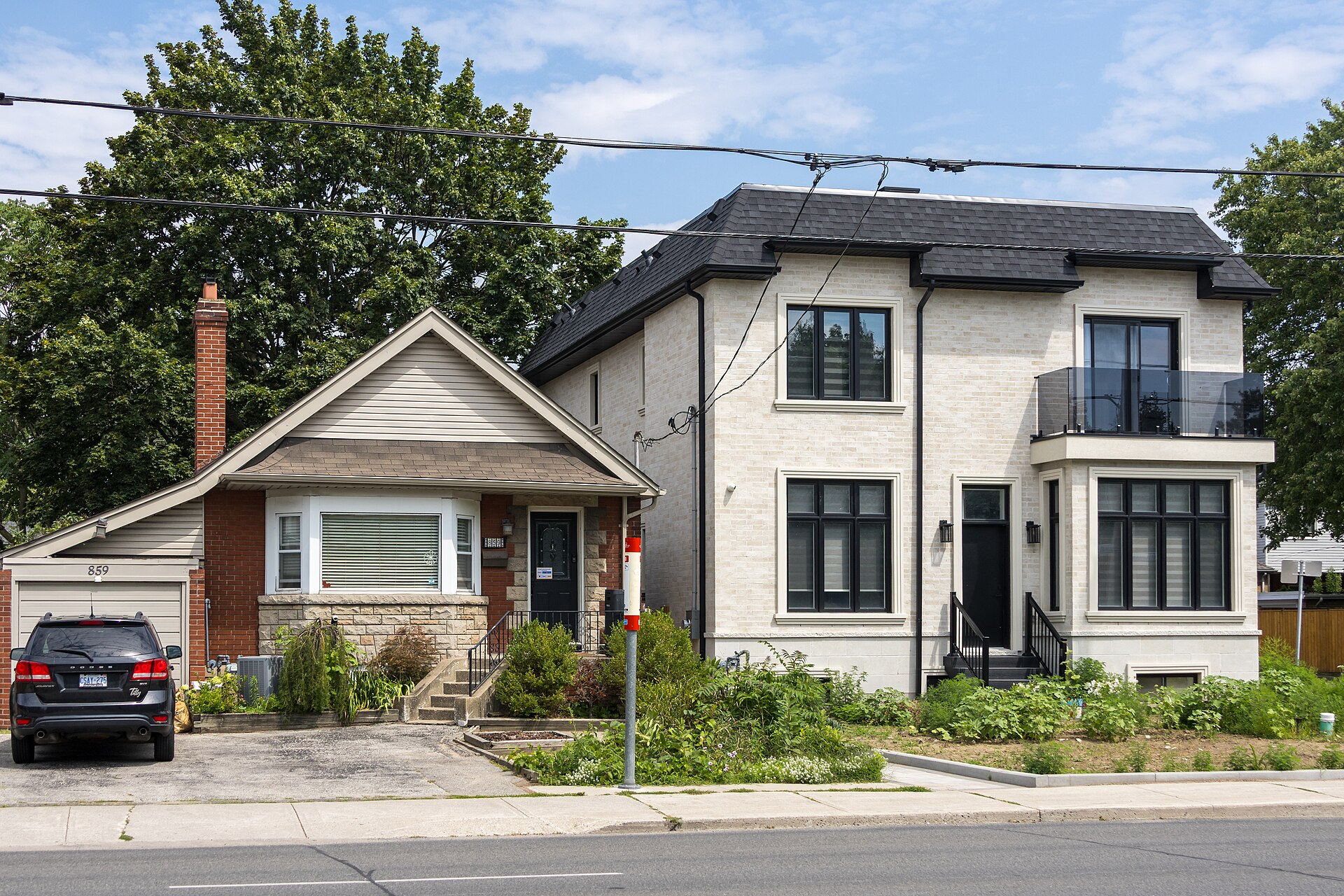
| Bungalows torn down for new builds | Land value is rising faster than the old homes |
| Second-storey additions on the street | Families are staying and expanding rather than moving |
| Bungalows selling quickly with little updating | Strong demand for one-level living in the area |
Ontario’s housing rules now allow up to three residential units on most serviced urban lots, subject to local zoning and permits. That makes a bungalow with a big lot and a separate entrance more attractive in many areas. You can browse bungalows with a separate entrance to see what’s available.
Bungalow tip: Check whether the city has a secondary plan for the area. These documents often show where taller buildings, new parks and retail are planned years in advance.
Risks of buying in an emerging area
Early buyers take on some uncertainty. Transit projects can be delayed or changed. Construction can mean years of noise and detours. Retail may take longer to arrive than promised.
Protect yourself by buying a home that works for you today. Check the commute, the schools and the basics now, not in five years. If the neighbourhood improves, that’s a bonus rather than the whole plan.
Also avoid stretching your budget on the assumption that prices will rise. Markets move in both directions. In August 2026, the GTA average price was down 2.7% from a year earlier, a reminder that timing the market is hard.
Finally, think about resale. Even in an improving area, a bungalow on a busy road or backing onto a rail line may lag behind its quieter neighbours. Location within the neighbourhood still matters.
Frequently asked questions
How can I tell if a neighbourhood is up-and-coming?
Look for several signs together: new transit, rezoning, renovation permits, new local businesses and public investment in parks or schools. A local Realtor can confirm with sales data.
Do new transit lines raise nearby home prices?
They often increase demand near stations, but results vary and timelines can slip. Treat transit as one factor, not a guarantee of higher value.
Are bungalows a good buy in emerging neighbourhoods?
They can be, because their lots appeal to renovators, families and investors adding units. Check zoning and permit rules with the municipality first.
The bottom line on up-and-coming neighbourhoods
Spotting an up-and-coming neighbourhood is about reading many small signals, not chasing headlines. Combine city plans, transit timelines, street-level observation and sales data to make an informed choice.
Explore areas by region, starting with Durham Region bungalows, and compare what you find with our guide on how location affects property value.

Join The Discussion