
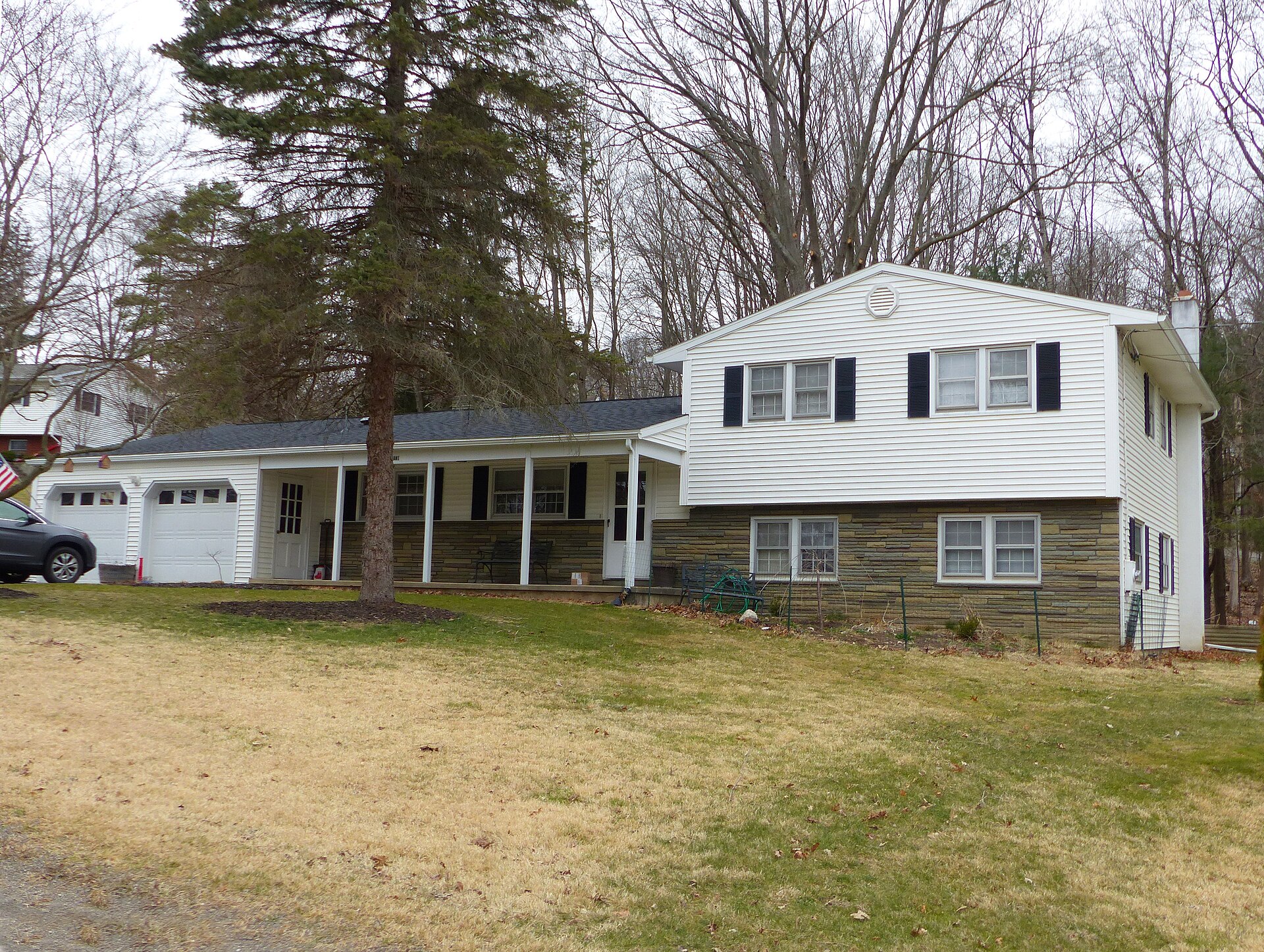
A backsplit house is a split-level home that looks like a one-storey bungalow from the street, with extra levels stepping down toward the back. Inside, short half-flights of stairs connect the main floor, an upper bedroom level and one or more lower levels. You get separate living zones without full staircases, which makes backsplits popular with families.
Key takeaways
- Backsplits look like bungalows from the front but have three to five levels inside.
- Half-flights of stairs separate living, sleeping and family areas.
- Many have a lower family room with large windows or a walkout.
- They suit families who want separate zones and good lower-level light.
- Stairs between levels make them less ideal for aging in place.
How a backsplit layout works
Most backsplits in Ontario were built from the late 1950s through the 1980s, often on sloping lots. The design uses the slope so the back of the house has more levels exposed than the front.
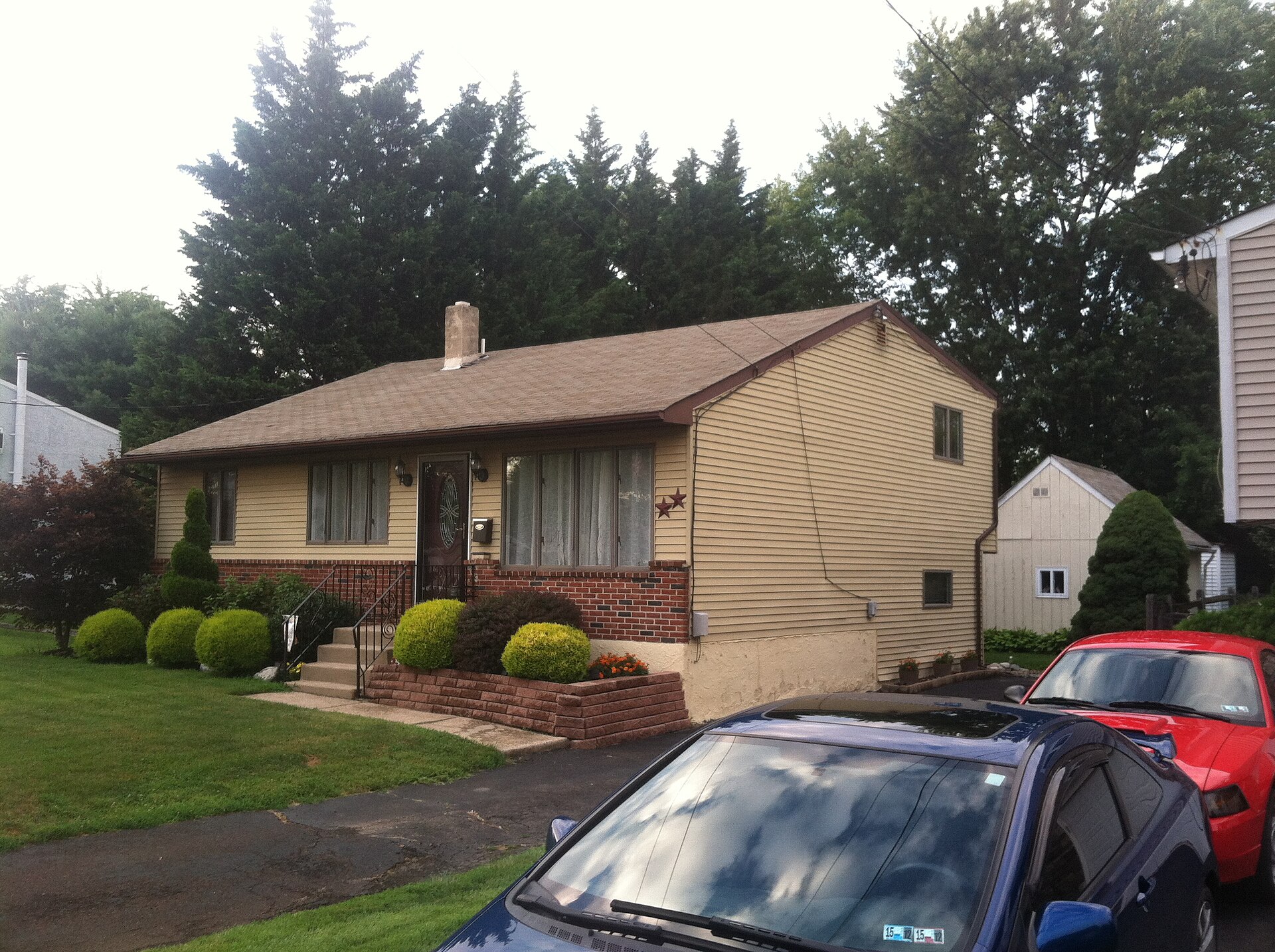
Typical four-level backsplit
- Main level: front entry, living room, dining room and kitchen.
- Upper level: up a half-flight, the bedrooms and main bathroom, sitting over the lower levels.
- Lower level: down a half-flight from the main floor, a family room, sometimes a bedroom, a bathroom and a side or rear door.
- Basement: another half-flight down, with laundry, storage, mechanicals and sometimes a rec room.
Three-level backsplits skip the basement. Five-level versions add another half-level, often a crawl space or extra rec room.
Backsplit vs. sidesplit vs. bungalow
| Feature | Backsplit | Sidesplit | Detached bungalow |
|---|---|---|---|
| Look from the street | One storey | Visible split at the side | One storey |
| Levels inside | 3 to 5 | 3 to 5 | 1 plus basement |
| Stairs in daily life | Several half-flights | Several half-flights | Minimal |
| Lower-level light | Good, often a walkout | Good | Limited |
| Typical lot | Often deeper or sloping | Often wider | Varies |
For the side-facing version, read our guide to sidesplit houses.
Backsplit pros and cons
Pros
- Separate zones: bedrooms are away from the family room noise.
- Bright lower family room, often with a walkout to the yard.
- Lots of living space for the footprint.
- Can offer good value for the living space, depending on the area.
- Potential for an in-law space on the lower level.
Cons
- Stairs everywhere, even if each flight is short.
- Harder to adapt for wheelchairs or walkers.
- Uneven heating and cooling between levels.
- Original kitchens and closed layouts can feel dated.
Bungalow tip: Uneven temperatures are the most common backsplit complaint. Ask whether the ductwork has been balanced, and consider a smart thermostat with remote sensors on the upper level.
Who is a backsplit best for?
Backsplits suit growing families especially well. Parents and kids sleep on the upper level, while teens or guests use the lower family room. Many buyers also like the extra separation for a home office.
They can also work for multigenerational households if the lower level has a bathroom and a separate entrance. Any self-contained second unit needs permits and must meet building and fire code requirements.
If stairs are a concern now or later, a single-level bungalow is usually a better long-term fit.
Where to find backsplits in the GTA
Backsplits are common in suburbs built during the 1960s and 1970s. Look in established parts of Scarborough, Etobicoke and North York in Toronto, older neighbourhoods in Mississauga and Brampton, and family areas of Oshawa, Whitby and the Hamilton Mountain.
These areas often have mature trees, larger lots and schools close by. You can explore homes in Peel Region or set a search for split-levels in the neighbourhoods you like. Because backsplits are listed under different names, such as “4-level” or “split level,” search with a few terms.
What to check when buying a backsplit
- Water and grading: lower levels sit below grade at the front, so look for moisture, efflorescence and the condition of window wells.
- Stairs and railings: check that every half-flight has a solid handrail.
- Heating and cooling: ask how the upper bedrooms feel in summer.
- Structure: look for cracks where levels meet, and ask the home inspector to check.
- Renovation history: ask for permits for any walls removed to open the kitchen.
Popular backsplit renovations
Many owners open the wall between the kitchen and living room to create a modern great room. Others replace closed stair walls with open railings, which makes the levels feel connected and brighter.
Some owners add a sunroom or deck off the lower family room to make the most of the walkout. Structural changes need a permit, and often an engineer. Get advice before removing any wall.
Frequently asked questions
Is a backsplit a bungalow?
A backsplit is a split-level home. It looks like a bungalow from the front, so it is often grouped with bungalows in searches, but it has several levels inside.
What is a four-level backsplit?
It is a backsplit with four levels: the main floor, an upper bedroom level, a lower family room level and a basement, all connected by half-flights of stairs.
Are backsplits hard to sell?
Not necessarily. Families often seek them out for space and separation. Updated layouts and good condition help them compete with other styles.
The bottom line on backsplits
A backsplit gives you more living space and better separation than many bungalows, in exchange for short flights of stairs. It is a smart choice for families who want room to spread out.
Browse backsplit homes for sale, or use our comparison tool to weigh one against a detached bungalow.



Join The Discussion